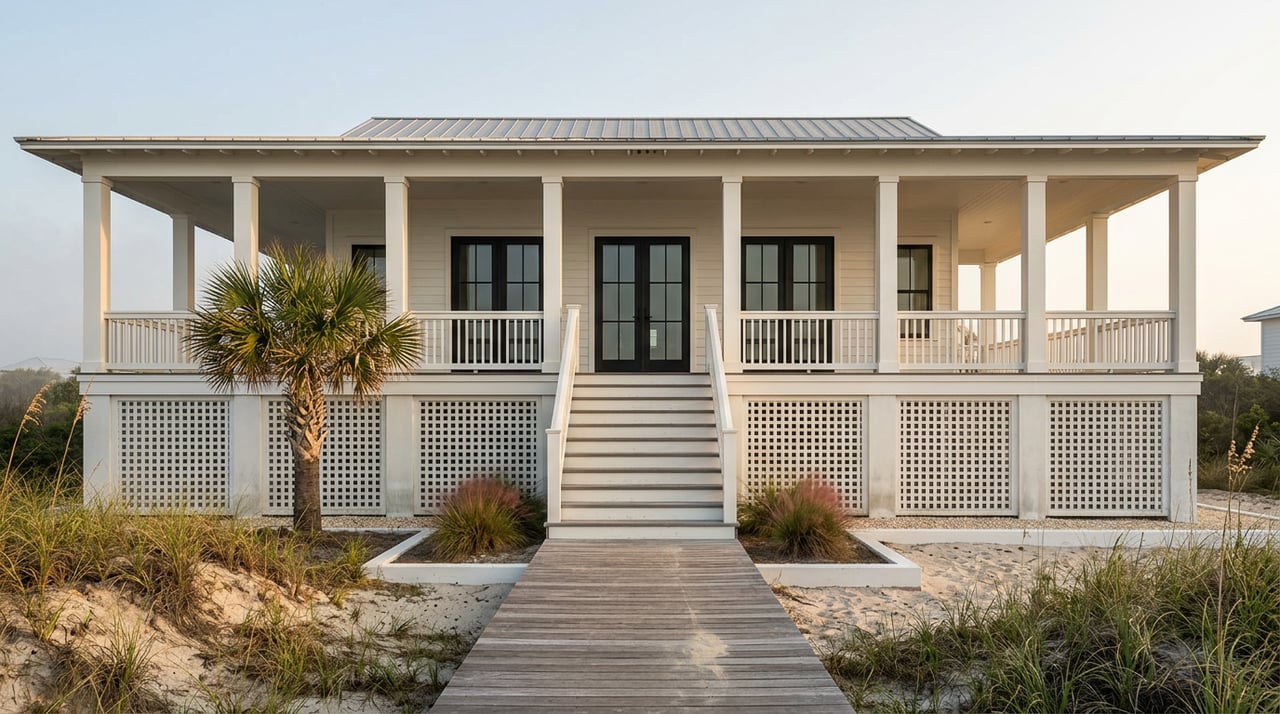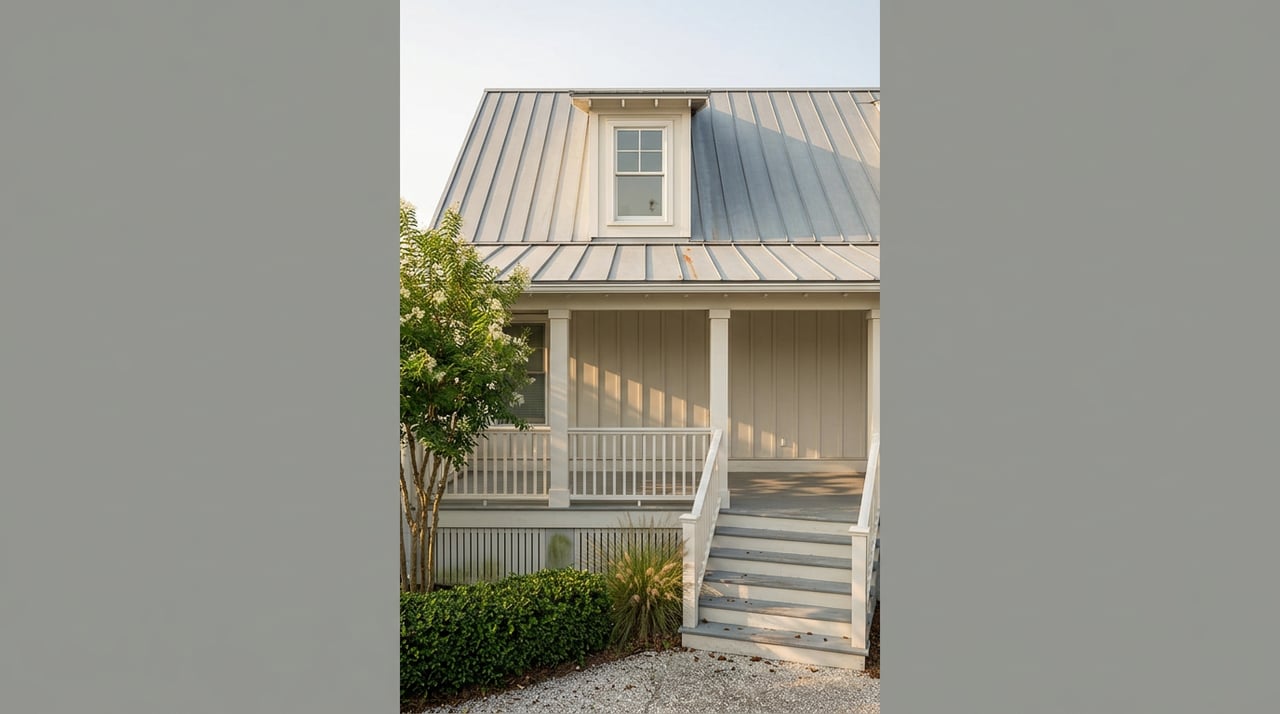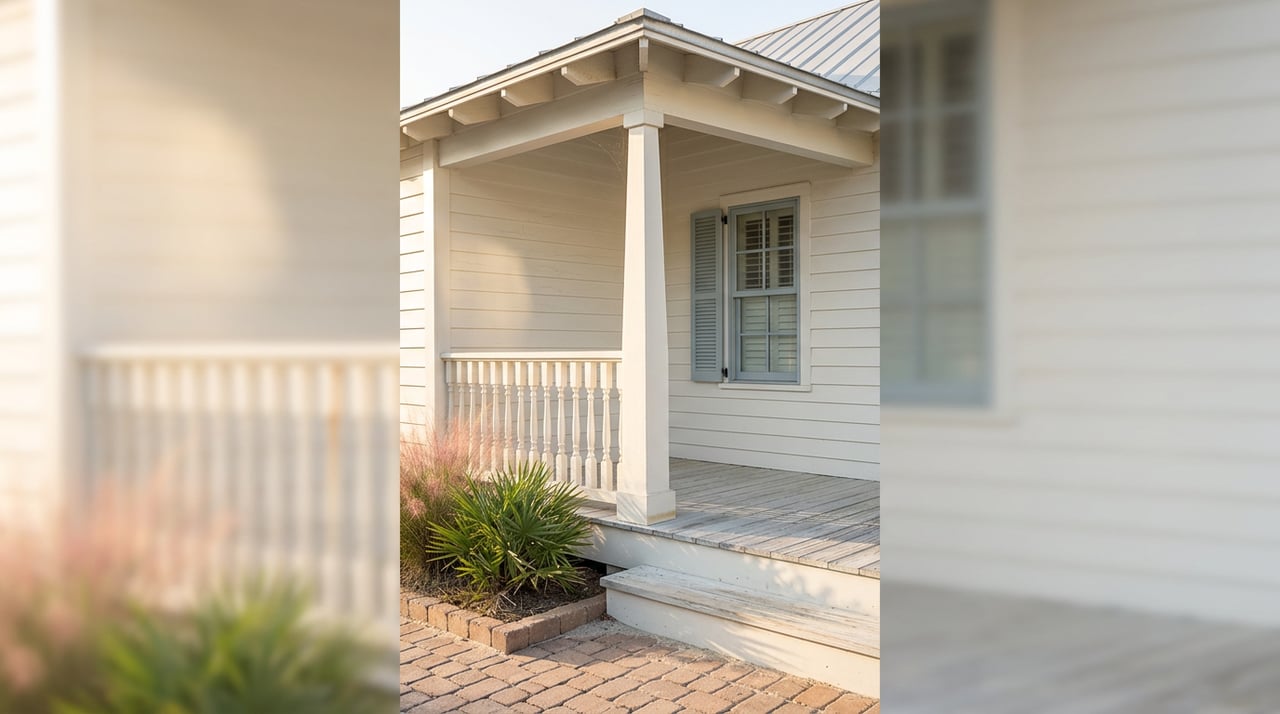
Picture a buyer touring a freshly painted cottage two blocks from the town square. The trim is crisp, the body color reads exactly like the postcard version of Seaside everyone comes here for, and nothing about the exterior looks unfinished. The buyer closes within six weeks. Then, months later, a notice arrives referencing an open file with the Seaside Architectural Review Committee. The color was approved on a conditional basis. The seller repainted, submitted the required sample, and never circled back for final sign-off. The paint job that sold the house was never technically finished in the eyes of the town that governs it.
This is not a scare story about red tape. It is how the review system in Seaside is built to work, and it explains something buyers, sellers, and even renovators consistently misjudge: in Seaside, approval is not a step you complete before closing. It is a status that travels with the house, and a new owner can inherit an open one without ever knowing it existed.
A Code Built to Outlast Any Single Owner
Seaside's architectural rules did not arrive as an afterthought bolted onto an HOA handbook. The town was shaped in the 1980s around a form-based code developed by planners Andrés Duany and Elizabeth Plater-Zyberk, one of the first codes of its kind applied to a new American town. According to the Society of Architectural Historians, the code regulates building size and scale, the range of permitted materials, the color palette, and specific formal details, down to requiring vertical windows and encouraging exposed rafter tails.
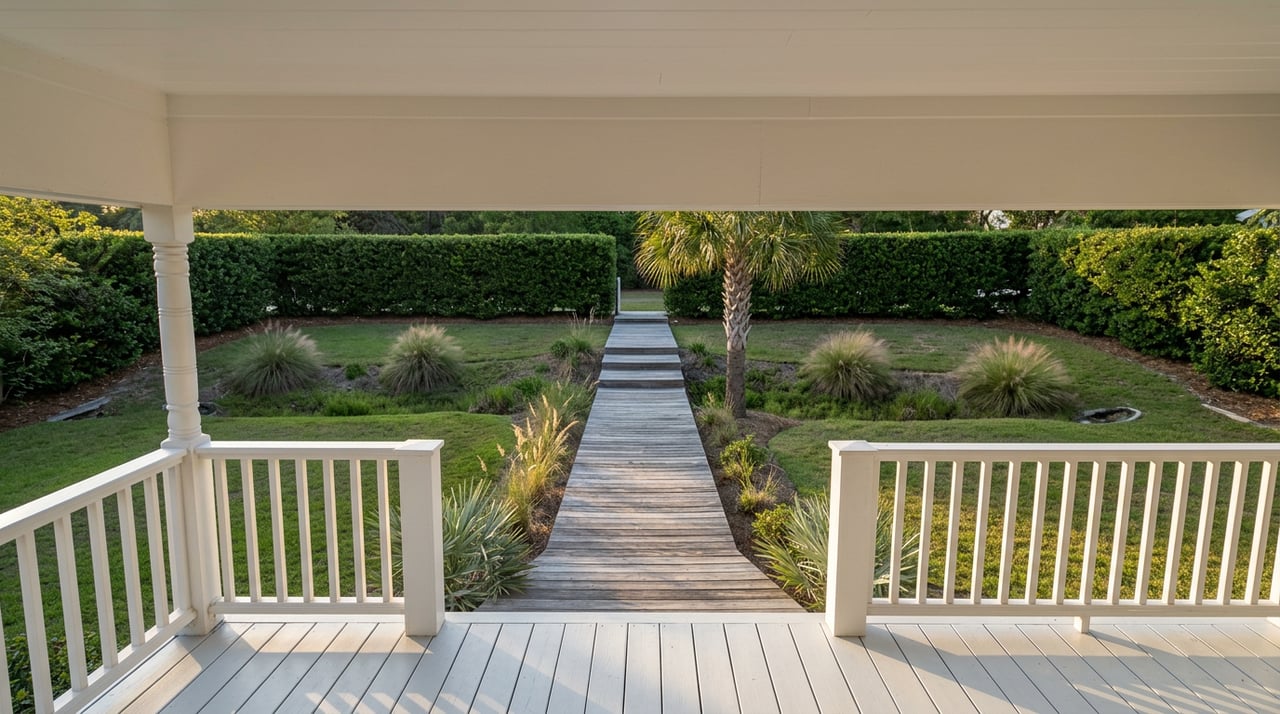
That level of specificity was intentional. The Congress for the New Urbanism has pointed to Seaside's raised foundations, deep porches, and metal roofs as design choices that do double duty, shaping the look of the town while also managing heat and storm exposure. The code was never meant to freeze the town in time. It was meant to let more than a hundred different architects build in Seaside over four decades while keeping the streetscape coherent. That is the tradeoff a buyer signs up for the day they close: individual freedom within a shared, actively enforced aesthetic, administered by a committee that does not stop reviewing once the sale is final.
Five Categories, and Only One Means You're Done
The committee that handles this ongoing review is the Seaside Architectural Review Committee, known locally as SARC. Public SARC records sort projects into several distinct categories, including contractor approval, renovation, new construction, minor items, and field approval. Each category can carry its own conditions, and approvals can be revised or even rescinded as a project moves toward final sign-off.
Here is the distinction that matters most for anyone buying, selling, or renovating in Seaside: a project can look complete and still be sitting in a conditional or field-approved state rather than a final one. Interior work such as kitchens, baths, and fixtures tends to move through review with more flexibility. Exterior work, from a paint job to a new porch rail, is held to a stricter standard, and it is exterior work that most often carries an open file into a future closing.
| SARC Review Category | What It Typically Covers | Why It Matters at Resale |
|---|---|---|
| Contractor approval | Verifying who is authorized to do the work | Confirms the project has a recognized point of accountability |
| Minor items | Small exterior changes, fixtures, and details | Easy to overlook, but still requires sign-off |
| Renovation | Substantive exterior or structural updates | Most likely to carry conditional status if not closed out |
| New construction | Full builds on a lot | Longest review runway, most documentation |
| Field approval | On-site confirmation during or after work | The step that turns conditional into final |
A buyer who only sees a finished-looking home has no way to know which of these categories a past project sits in, or whether it ever reached that last row.
The Paint Chip Is Not a Formality
Nowhere is the gap between looks-done and is-done more visible than color. Every exterior color in Seaside must be formally approved, and approval requires an on-site mock-up wall panel rather than a paint chip or a digital rendering. Body colors are assigned by area of town, and white is reserved for civic buildings, meaning a homeowner cannot simply pick a favorite shade and have a contractor apply it.
For a buyer, this means a "recently repainted" listing description is not the same as a fully closed color approval. For a seller, it means starting the mock-up and sign-off process early enough that repainting does not become the reason a closing slips. A color choice that has not cleared field approval is exactly the kind of open condition that quietly transfers to whoever signs the deed next.
What the Yard Will Not Let You Do
Seaside's code reaches past the house and into the yard, which surprises buyers who assume a coastal property automatically comes with a pool. In-ground pools are permitted only within the footprint of the main house. Above-ground pools are prohibited outright, apart from small temporary pools for children. Pools, hot tubs, and spas are barred entirely along street frontages.
The same frontage restriction applies to mechanical equipment. Air conditioning compressors, utility meters, solar panels, and permanent grills are limited along frontages and, in many cases, must be screened or separately approved. Roof shapes are steered toward simple gables and hips. Window and door changes touch on materials, hardware finish, shutter type, glazing, and limits on nonstandard shapes or tinted glass. None of this is arbitrary. It is the same logic that keeps the streetscape reading as one coherent town rather than a collection of individual choices, and it is worth knowing before a buyer starts sketching a backyard oasis that the lot may never be able to hold.
Three Signatures, Not One
SARC is only the local layer. Any exterior project in Seaside also passes through Walton County's Building Division for permitting and plan review, and projects submitted after December 31, 2023 fall under the 2023 Florida Building Code. For homes seaward of the Coastal Construction Control Line, a further review by the Florida Department of Environmental Protection applies, and the county will not issue a building permit without the proper DEP notice or an exemption determination. Major habitable structures in the coastal building zone also require sealed plans from a Florida-licensed architect or engineer, and some seaward projects carry additional requirements around pile support and elevation.
None of these three layers, SARC, the county, and in some cases the state, moves on the same calendar. A renovation that clears SARC review can still be waiting on a county permit, and a project near the coastal line can be waiting on all three at once. A timeline built around contractor availability alone tends to be the first thing that goes wrong.
The Question Most Buyers Never Ask
Standard due diligence in most 30A communities focuses on inspections, disclosures, and survey lines. In Seaside, that list is incomplete without one more question: what is this home's SARC approval history, and has every past project reached final approval rather than stopping at conditional or field status.
That single question does more work than it seems to. It surfaces unfinished color approvals, additions that never closed out, and pool or hardscape work that may not have been fully sanctioned in the first place. It also gives a buyer a realistic sense of what their own renovation timeline will look like once they own the home, since a property with a clean approval history tends to move through future review faster than one with open threads still attached.
For sellers, the same records work in reverse. Confirming that every past project reached final sign-off, well before a home goes on the market, removes a friction point that can otherwise surface during a buyer's due diligence and complicate a closing timeline that everyone assumed was straightforward.
A Few Direct Answers
Do I need approval to repaint my house the same color it already is? Color changes in Seaside go through formal review, including an on-site mock-up panel, and body colors are assigned by area of town. Treat any repaint as a project that needs sign-off, not a weekend errand.
Can I add a pool to a Seaside property? Only within the footprint of the main house, and never along a street frontage. Above-ground pools are not permitted outside of small temporary units for children.
Who handles approval if my lot is close to the Gulf? SARC still reviews the design locally, but a lot seaward of the Coastal Construction Control Line also needs Florida DEP review, and the county will not issue a building permit until that DEP notice or exemption is in hand.
Seaside's design code is the reason the town still reads the way it did decades ago, and it is also the reason a smart purchase here starts with paperwork, not just a walk-through. If you are weighing a Seaside property, whether you are buying, selling, or planning a renovation, Diana Kish can walk you through the approval history before it becomes your problem. Request a Complimentary Market Consultation and start with the questions that actually protect your closing date.