Thinking about building or renovating near the sand in Seagrove? Coastal setbacks and Florida’s Coastal Construction Control Line can affect where you place a home, what you can add, and even your long‑term resale. You want a beautiful beach property that is safe, compliant, and marketable. This guide breaks down the rules, timelines, and smart steps to protect your investment. Let’s dive in.
Coastal setbacks and the CCCL explained
Before you sketch a floor plan, it helps to know the lines that control what you can build.
What the CCCL means
Florida’s Coastal Construction Control Line (CCCL) is a state line that marks sensitive beach and dune areas. Work seaward of the CCCL is heavily regulated to protect dunes, public safety, and public beach access. New construction, substantial improvements, dune alterations, and armoring typically require a state CCCL permit. Some activities are not allowed in this zone.
Local coastal setbacks
Walton County also has its own coastal setback line. This county setback is usually landward of the CCCL and defines how close a structure can be to the shoreline. Your lot may be limited by both the state CCCL and the county setback. In practice, the most restrictive rule controls the buildable area.
Mean high water and the public beach
Mean high water helps define where private property ends and the public beach begins. Setback and CCCL references relate to these natural boundaries. Because shorelines change with erosion or accretion, these positions can shift over time.
FEMA flood zones and elevation
FEMA flood zones and Base Flood Elevation set minimum elevation and foundation standards. In coastal zones you will often see piling or column foundations, flood‑resistant materials below BFE, and specific venting requirements. These federal rules work alongside CCCL and county standards.
Why multiple systems matter
A Seagrove lot can be affected by all of the above at once. You must meet state CCCL rules, county coastal setbacks, FEMA elevation, and local land‑use requirements. The strictest rule usually sets your final building envelope and design options.
The rules that apply in Seagrove Beach
Here is how the programs layer in Walton County.
State: DEP CCCL program
The Florida Department of Environmental Protection (DEP) manages the CCCL. Construction or substantial improvement seaward of the line generally requires a DEP CCCL permit. The program regulates placement, dune alteration, walkovers that affect dunes, and armoring. Repairs and emergency work have specific thresholds and notice requirements. After storm damage, rebuilds can trigger additional review or mitigation.
Local: Walton County permitting
Walton County enforces its coastal setback line through the Land Development Code and building permits. The county typically requires elevation certificates, engineered piling foundations where applicable, and proof of state permits when work is near or seaward of the CCCL. Permits are required for new homes, major renovations, pools, dune walkovers, and certain vegetation or dune work.
Federal: FEMA and NFIP
Flood zone designations, including coastal V zones, drive elevation and foundation choices. Substantial improvement or substantial damage rules can require the entire structure to comply with current standards when work crosses cost thresholds tied to structure value.
Statutes, enforcement, and lenders
Florida’s beach and shore preservation statutes authorize the CCCL program. DEP enforces CCCL rules, and Walton County enforces local codes. Work started without proper permits can lead to stop‑work orders, fines, and restoration requirements. Lenders and insurers often require documentation of compliance before closing or issuing coverage.
Lines can change
CCCL and county setback lines are updated as shorelines evolve. Always verify the current positions with DEP and Walton County before you buy, design, or permit.
How setbacks shape design and cost
Coastal rules in Seagrove do not prevent great homes. They simply influence your footprint, elevation, and features.
Buildable footprint and siting
Setbacks shrink the area where you can place a structure. On narrow beachfront lots, you may need a smaller ground‑level footprint and more vertical living to reach your desired square footage. Creative stacking, efficient cores, and covered outdoor rooms can help you maximize space within the legal envelope.
Foundations and elevation
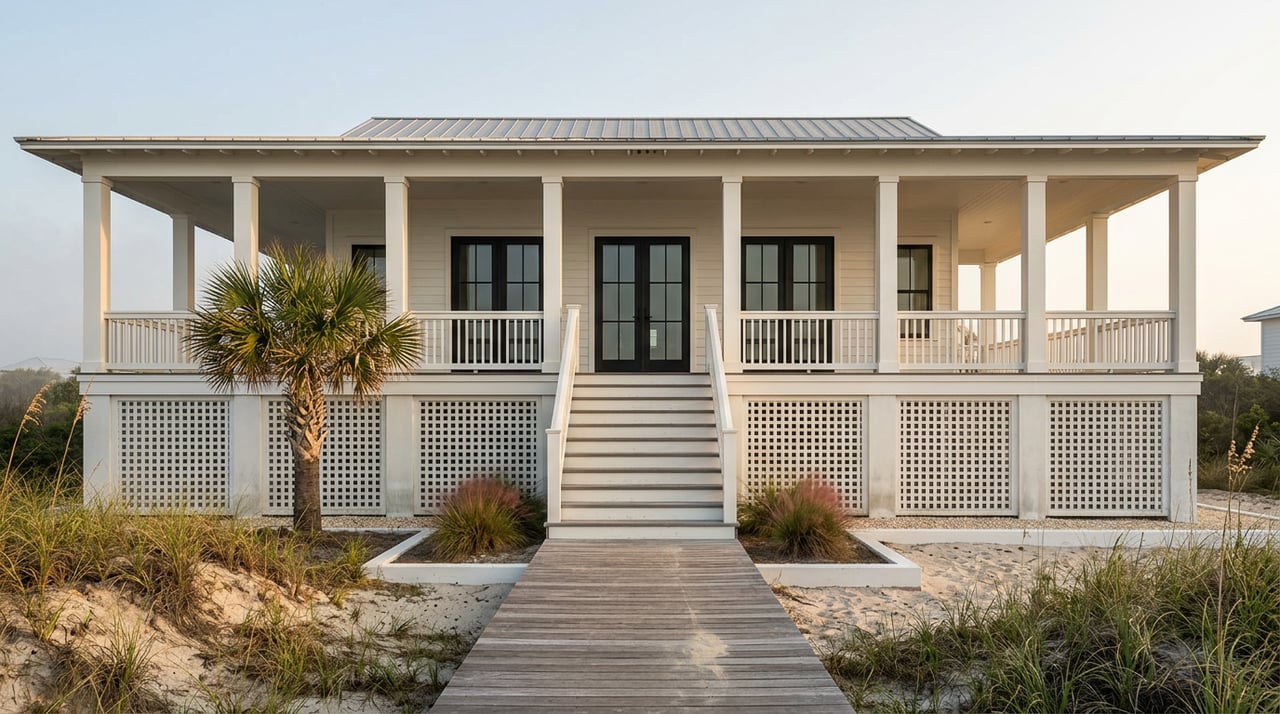
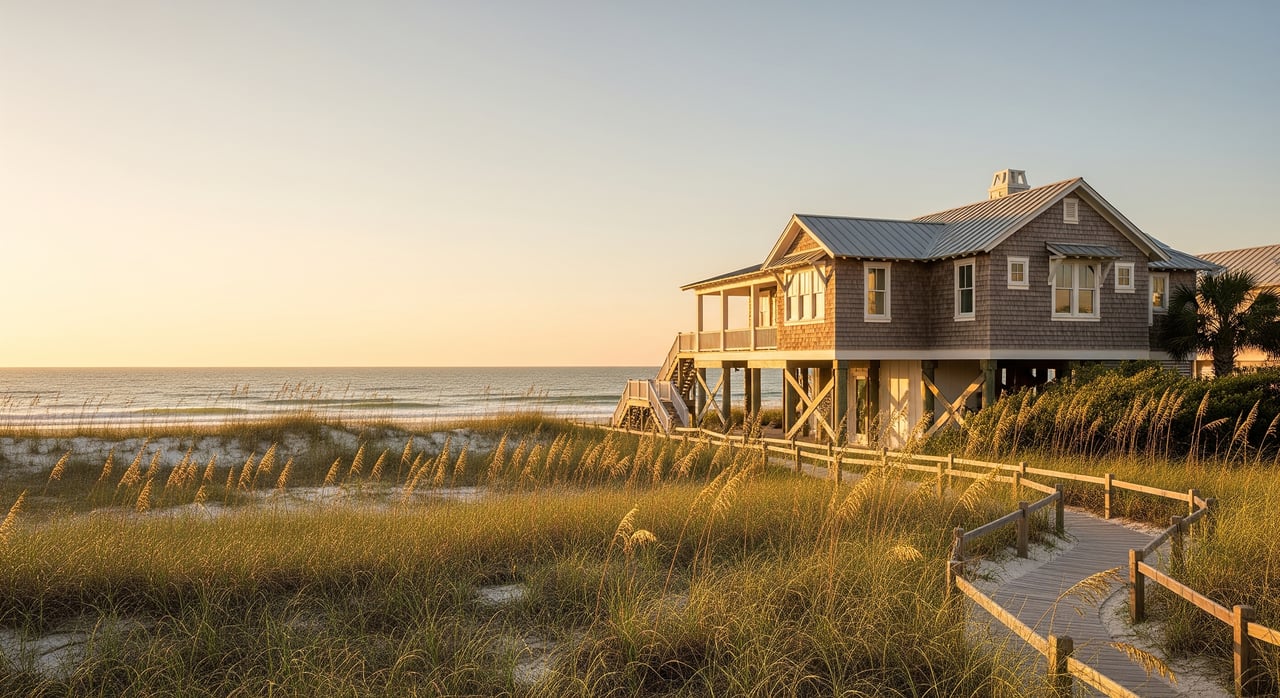
In coastal flood zones, homes are commonly elevated on pilings or columns. Below the Base Flood Elevation, you will use flood‑resistant materials and specific openings. Foundations are designed to avoid destabilizing dunes and to handle wave forces in higher risk zones.
Pools, decks, and accessory items
Pools and hardscape near the beach face added scrutiny. Some locations prohibit pools seaward of the CCCL. Where allowed, you may need special engineering, higher elevations, or cantilevered designs. Flat grade pools in setback or CCCL areas are often not permitted.
Dune protection and vegetation
Dune systems are protected. Removing dune vegetation, reshaping dunes, or adding a walkover requires permits and sensitive design. After storms, restoration or plantings can be required.
Seawalls and armoring
Bulkheads and new armoring are often restricted or prohibited because they can worsen erosion nearby. Where existing armoring is present, repairs usually need permits and may require mitigation.
Renovations and storm repair
If renovations exceed substantial improvement thresholds, you may have to bring the entire structure up to current standards, including elevation or moving landward within the lot. After storm damage, rebuilding can be limited to the prior footprint or require changes based on current rules and permit conditions.
Access and easements
Public beach access is generally seaward of mean high water. Dune walkovers and paths must minimize dune impacts and be permitted by the county and, where applicable, the state. Recorded access or utility easements can further reduce buildable area.
Design flexibility and long‑term adaptability
Expect compact footprints, elevated porches and stairways, and removable or elevated accessory structures. Many designers favor lightweight, reversible elements that can adapt as shoreline positions change.
Cost and timeline implications
Coastal permitting adds time and expertise. You should budget for geotechnical and coastal engineering, specialized surveys, and extended review timelines. Elevated foundations, dune management, and potential mitigation can increase overall costs.
Buyer and seller due diligence in Seagrove
A little homework up front protects your purchase and your resale.
- Confirm the CCCL and Walton County coastal setback locations for your parcel. Ask DEP and the county for the most recent official maps or GIS layers.
- Order a current boundary and topographic survey showing mean high water, dune lines, existing structures, and the lot’s relationship to the CCCL and county setbacks.
- Request county records: prior permits, variances, and any elevation certificates on file.
- Review FEMA Flood Insurance Rate Maps to determine your flood zone, Base Flood Elevation, and whether you are in a coastal high hazard (VE) zone.
- Check for prior DEP CCCL permits, open enforcement actions, or required restoration orders on the property.
- Ask about recent shoreline change and erosion history for your beach segment. Historical aerials and county shoreline assessments are helpful.
- Verify whether any seawalls or armoring exist and whether they are properly permitted.
- Review title and recorded easements, plus any HOA rules affecting setbacks, architecture, or walkovers.
- Engage a coastal engineer and a local permitting expert if you plan to build. They can translate code into clear design options and help you avoid costly missteps.
- Confirm insurance and financing. Ask your lender and insurer about requirements for properties seaward of local setbacks or in VE zones.
Resale, insurance, and financing impacts
Coastal constraints influence value, but good documentation and design can be an advantage.
- Buyer perception. Properties seaward of setback lines can be harder to finance and insure, which may narrow your buyer pool.
- Marketability. Homes with clear compliance records, elevation certificates, and engineered dune protection often sell more easily than properties with unresolved permits or erosion concerns.
- Value risk. Ongoing shoreline change near the CCCL can introduce future relocation or mitigation needs, which affects long‑term value.
- Transferability. Open DEP orders, unpermitted work, or unclear beach boundaries can delay closing or reduce the sale price. Clean files sell better.
Your next step on 30A
Coastal setbacks do not have to be confusing. With the right plan, you can design a compliant, beautiful Seagrove home and protect your investment for the long term. If you want one‑on‑one guidance tailored to your lot, connect with Diana Kish for local insight, design‑forward strategies, and a clear permitting roadmap. Request a Complimentary Market Consultation.
FAQs
How do I check if my Seagrove lot is seaward of the CCCL?
- Review the state CCCL maps and confirm with Walton County using your parcel information or an updated survey; DEP map layers are the definitive source.
Can I build a new home if my lot is seaward of the CCCL?
- New construction seaward of the CCCL generally requires a DEP permit and many activities are restricted; approval depends on site conditions and design.
Can I renovate if part of my home is seaward of the CCCL?
- Repairs and minor renovations may be allowed, but substantial improvements trigger DEP and county review and can require full compliance or mitigation.
After storm damage, can I rebuild where my house stood?
- It depends on the extent of damage, local substantial damage rules, conformity with setbacks and the CCCL, and DEP guidance; rebuilding may require changes.
Do the CCCL and county setback lines move over time?
- Yes, both lines are updated periodically to reflect erosion or accretion; always verify current positions with DEP and Walton County before design or purchase.
Will a seawall guarantee protection and allow building closer to the beach?
- Armoring is often restricted or prohibited seaward of the CCCL because it can worsen erosion; existing armoring repairs require permits and may need mitigation.
How do setbacks affect beach access from my property?
- Public access typically exists seaward of mean high water; any dune walkovers or paths must be permitted and designed to avoid dune damage.